

QCOM: Memory Crunch Deepens; Smartphone Stocks at Risk?

Qualcomm (QCOM) released its Q1 FY2026 results (quarter ended Dec 2025) after the U.S. market close on Feb 5 Beijing time. Key takeaways:
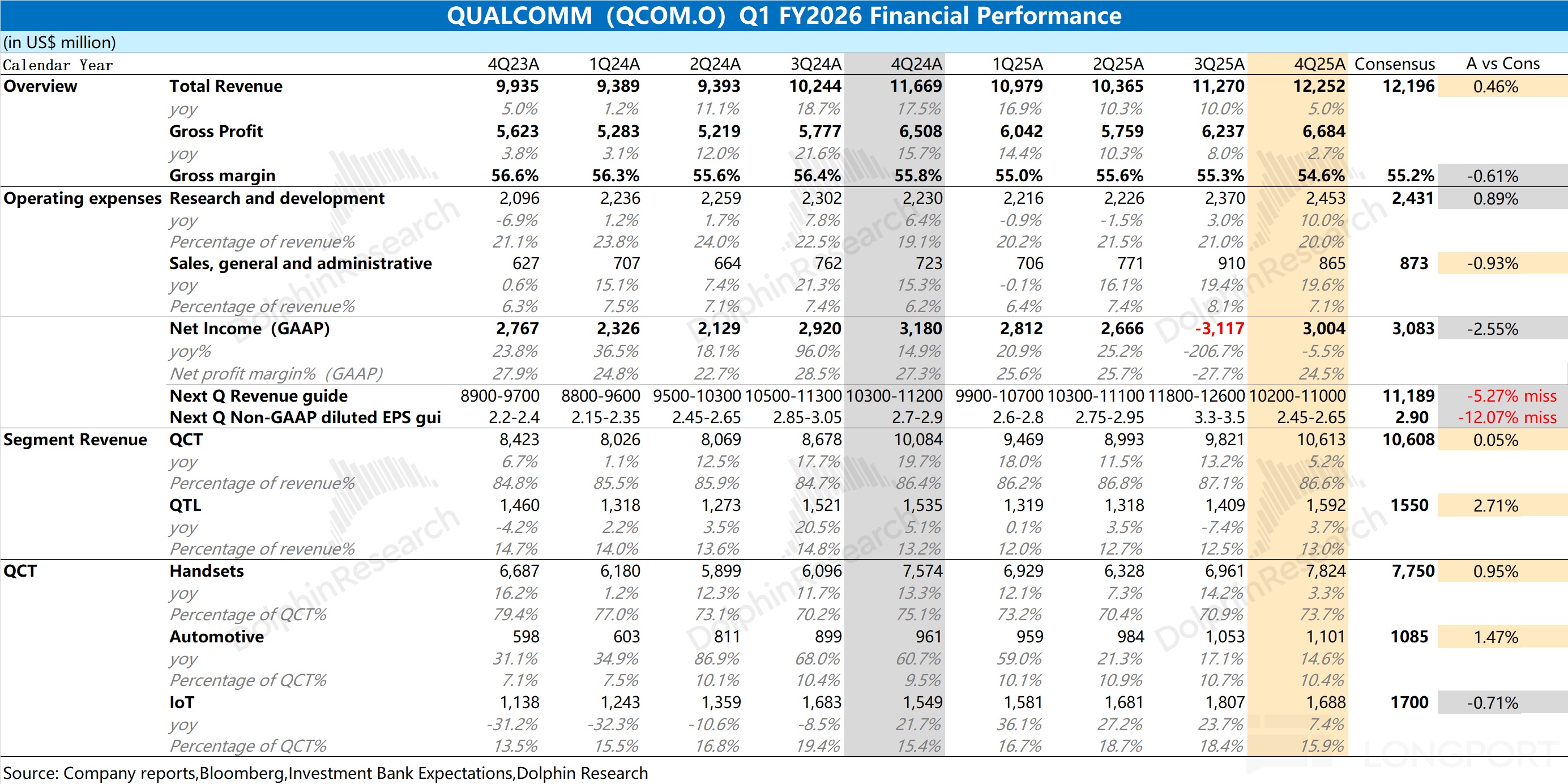
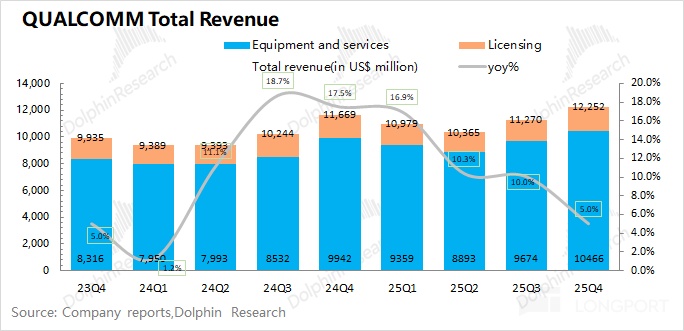
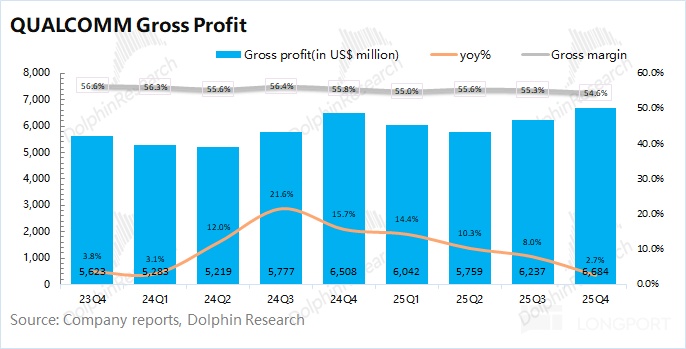
1) Headline numbers: Revenue was $12.25bn, +5% YoY, in line with consensus ($12.2bn). Growth decelerated again, mainly due to a sluggish downstream smartphone market. GPM was 54.6%, down 120bps YoY and below consensus (55.2%), pressured by memory tightness that weighed on QCT margins.
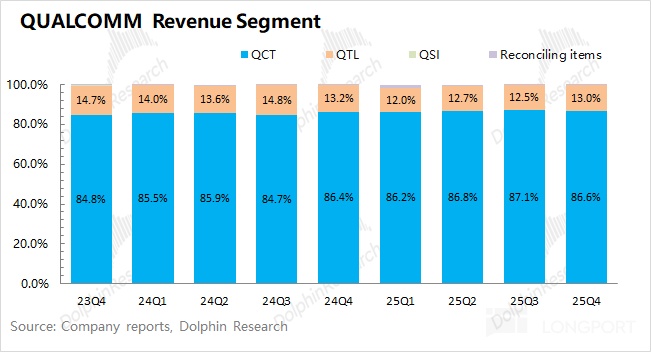
2) Segment mix: $Qualcomm(QCOM.US) operates two major businesses: QCT (semis) and QTL (licensing). QCT remains the primary driver, contributing close to 90% of revenue.
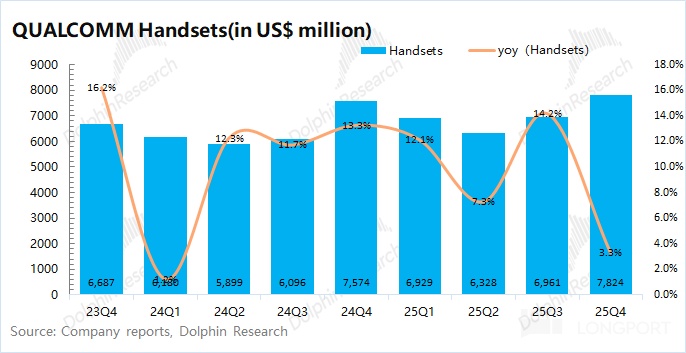
Within QCT: ① Handsets revenue was $7.8bn, +3.3% YoY. Growth slowed materially, caused by: soft industry shipments growing only low single digits; and flagship launches pulled forward to last quarter, front-loading demand.
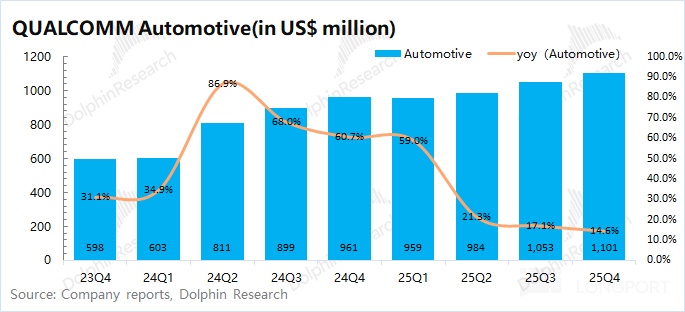
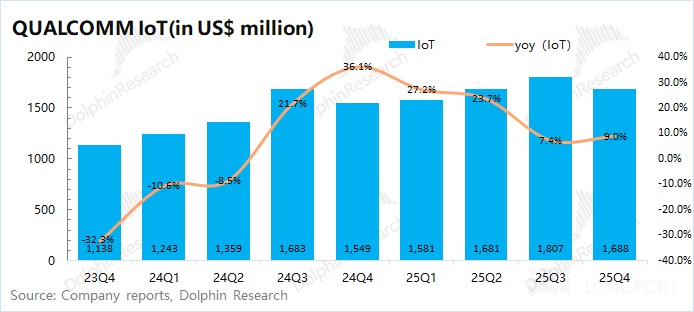
② Auto revenue was $1.1bn, +14.6% YoY, driven by Snapdragon Digital Cockpit shipments. ③ IoT revenue was $1.69bn, +9% YoY, supported by consumer, networking, and industrial demand. Growth cooled from prior 20%+ YoY as China state subsidies tightened.
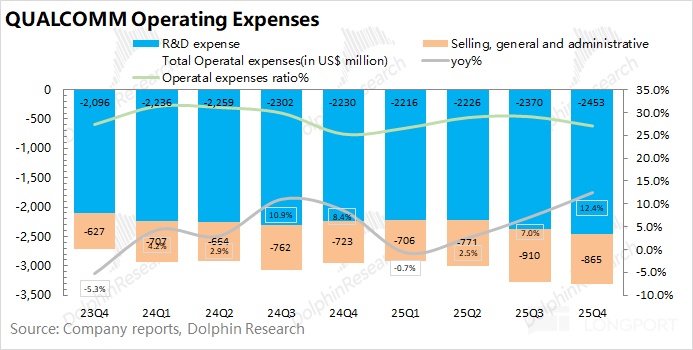
3) Opex: Operating expenses rose to ~$3.32bn. R&D increased to ~$2.45bn, while S&M was ~$870mn for the quarter.
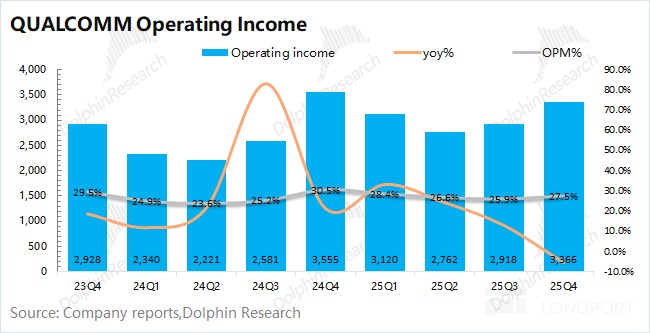
With lower GPM and higher opex, core OP was $3.37bn, down 5% YoY.
4) Next-quarter outlook: Q2 FY2026 revenue guidance of $10.2–11.0bn, below consensus ($11.2bn). Non-GAAP EPS guided to $2.45–2.65, also below consensus ($2.90).
Dolphin Research view: Memory shortages keep the core under pressure.
Top-line met expectations, while GPM fell primarily due to memory shortages/price hikes, which dragged QCT margins. Given the known constraints from memory and tighter state subsidies, segment prints were largely in line. The real disappointment lies in the next-quarter guide.
For next quarter, Qualcomm guides revenue to $10.2–11.0bn, below consensus ($11.2bn). Non-GAAP EPS is $2.45–2.65, also below consensus ($2.90). This implies declines in both revenue and margins QoQ.
The main drag is handsets. Management expects handsets revenue of only about $6.0bn next quarter, a double-digit YoY decline, citing DRAM supply shortages. Street had already trimmed estimates, but the magnitude of memory constraints appears worse than anticipated.
Beyond the print, the market focuses on several areas:
a) Legacy core: still under pressure
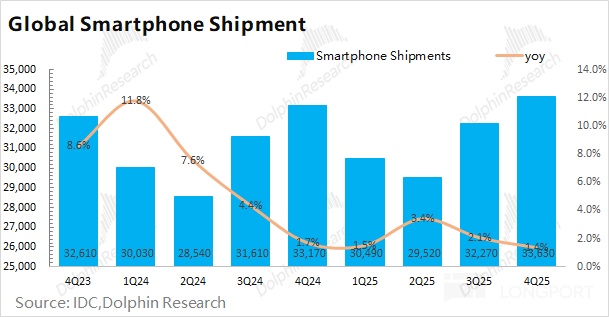
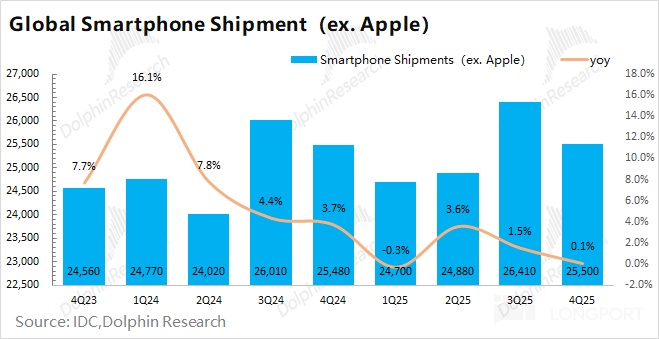
Handsets remain the largest business, accounting for over half of revenue. Global smartphone shipments were 363mn units this quarter, up just 1.4% YoY.
With Apple and Android as the two camps, Apple shipments rose 5.7% YoY while Android saw no growth, weighing on Qualcomm’s handset performance. Handsets and IoT face headwinds from memory shortages and tighter state subsidies. Guidance suggests memory tightness will be worse than expected.
Management guides handset revenue to about $6.0bn next quarter, ~13% YoY down. This means the memory issue has moved beyond margin erosion to outright supply constraints, directly impacting shipments and revenue (shortage → stocking/shipment bottlenecks → revenue decline). The escalation of the 'memory shortage' will keep the core under pressure.
b) AI: AI PC and data center as potential growth vectors
AI initiatives provide optionality near term rather than immediate earnings impact.
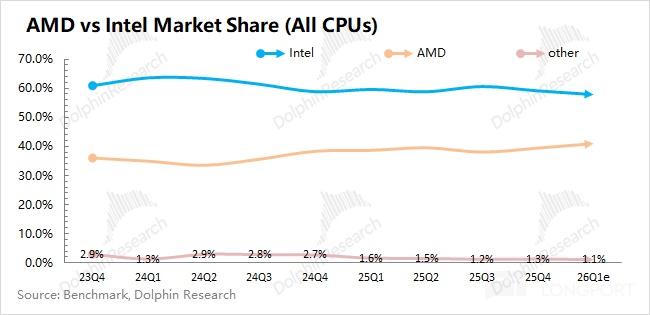
① AI PC (vs. Intel): Qualcomm launched its 2nd-gen PC platform, Snapdragon X2 (Elite Extreme, Elite, Plus). The Hexagon NPU reaches 80 TOPS (vs. 45 in prior gen) and supports on-device 13B-parameter LLMs.
With Windows on Arm maturing, Qualcomm has partnered with Microsoft, Dell, and Lenovo to break x86’s dominance and enter mainstream price bands. Penetration remains low, however, and poses limited threat to Intel and AMD at this stage.
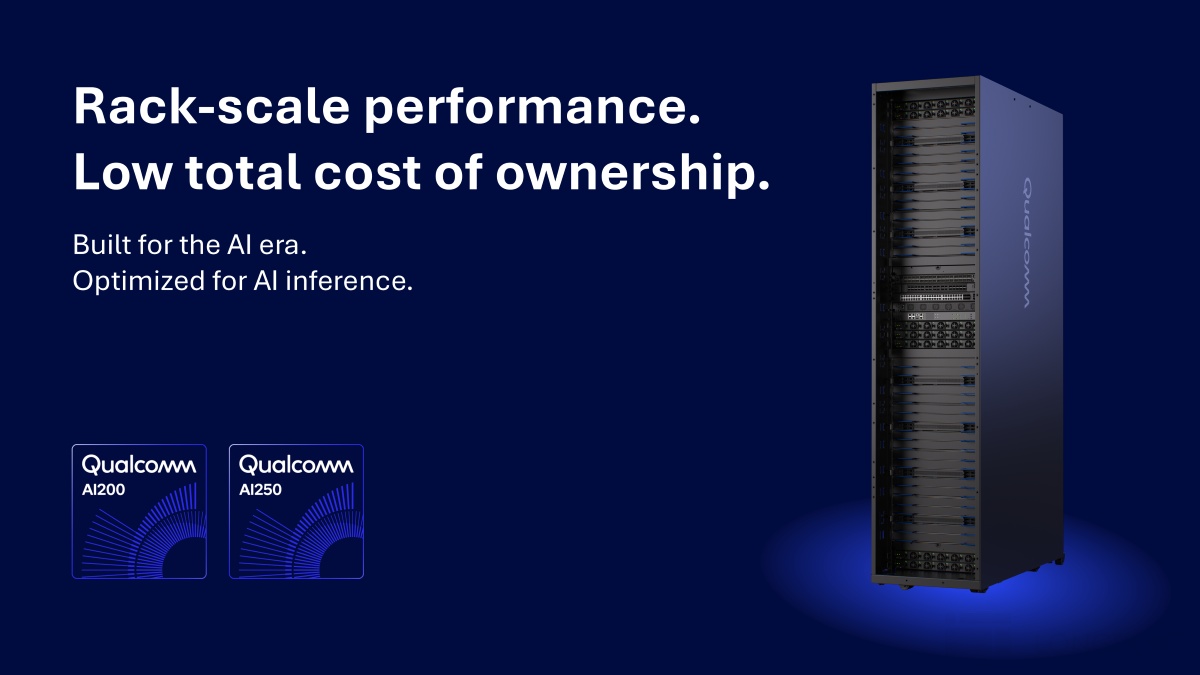
② AI data center (vs. NVIDIA): In late Oct 2025, Qualcomm announced two new AI chips — AI200 (mass production in 2026) and AI250 (2027), marking a strategic push into data centers.
From disclosed info: 1) AI200 is a rack-scale solution focused on high memory capacity and lower TCO, optimized for LLM/multimodal inference. 2) AI250 adopts a near-memory compute architecture, offering 10x+ effective memory bandwidth and lower power, again targeting memory-intensive inference.
Qualcomm named Saudi AI startup Humain as its first customer and plans to deploy 200MW of capacity on AI200 starting 2026 (Dolphin Research estimates ~$3bn revenue opportunity).
At the current market cap of $158.3bn, Qualcomm trades at ~17x FY2026 core after-tax OP (assumes +0.4% YoY revenue, 54% GPM, 13.7% tax rate). Historically, the stock has traded mostly in the 10x–20x PE range, placing it slightly above the midpoint now.
Overall, with memory issues escalating from price hikes to outright shortages, the core earnings base is unlikely to improve. Previously, the Street expected memory inflation to dampen demand but not to cause double-digit declines in 2026 handsets, and many had already cut PTs.
At this stage, only breakthroughs in AI PC or data centers may restore confidence. Management’s guide points to greater-than-expected pressure, with memory not only hitting margins but also constraining supply and shipments. Persistent shortages will likely drive another reset lower in both earnings and valuation expectations.
Below are the detailed takeaways from Qualcomm’s report:
I. Overall results: growth clearly slowed
1.1 Revenue
Q1 FY2026 (25Q4) revenue was $12.25bn, +5% YoY, in line with consensus ($12.2bn). While all segments grew, QCT’s growth slowed notably due to memory shortages and tighter state subsidies.
1.2 Gross profit
Gross profit was $6.68bn, +2.7% YoY. GPM was 54.6%, down 120bps YoY and below consensus (55.2%), mainly on QCT margin pressure from higher memory costs.
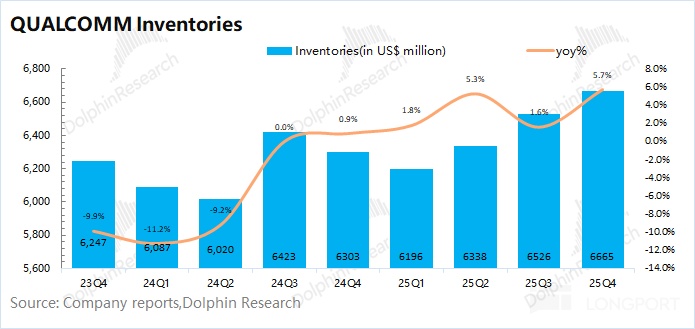
Inventory stood at $6.67bn in Q1 FY2026 (25Q4), +6% YoY.
Based on guidance, Dolphin Research believes end-demand in handsets and adjacent markets remains soft, limiting restocking incentives. With memory shortages, inventory is likely skewed, with memory components in short supply.
1.3 Opex and profit
Opex was $3.32bn in Q1 FY2026 (25Q4), +12.4% YoY.
① R&D was $2.45bn, +10% YoY, remaining the largest spend. ② SG&A was $865mn, +19.6% YoY.
Core OP better reflects underlying performance given tax adjustments. Core OP was $3.37bn (-5% YoY) with a 27.5% margin, pressured by lower GPM and higher opex.
II. Segment details: memory shortages to drive double-digit handset decline
By segment, QCT (CDMA technologies) remained the largest contributor at 87% of revenue, covering most semiconductor sales. The remaining ~13% came from QTL (licensing).
QCT remains the most important business; details below:
2.1 Handsets
Handsets revenue in Q1 FY2026 (25Q4) was $7.82bn, +3.3% YoY, in line with expectations ($7.75bn). Dolphin Research attributes the slowdown to: ① the flagship Snapdragon 8 Elite Gen5 was launched a quarter earlier; ② a generally weak handset market.
Industry data show that, with Apple’s spec bump at same price, ex-Apple smartphone shipments were 255mn units in 4Q25, roughly flat YoY, underscoring Android weakness.
More concerning than the quarter is next quarter’s handset guide at $6.0bn, implying a double-digit decline.
Management cited memory shortages. Previously, the Street mainly expected memory inflation to raise costs and indirectly soften demand. Guidance now implies a shift from price pressure to physical shortages, constraining stocking and shipments and putting significant pressure on handsets.
2.2 Auto
Auto revenue in Q1 FY2026 (25Q4) was $1.1bn, +14.6% YoY, in line with consensus ($1.08bn), driven by Snapdragon Digital Chassis shipments.
Qualcomm signed a long-term deal with Volkswagen, and leaders such as Toyota and Hyundai will adopt its solutions. Management expects >35% YoY growth next quarter in Auto, though it remains ~10% of revenue.
2.3 IoT
IoT revenue in Q1 FY2026 (25Q4) was $1.69bn, +9% YoY, in line with consensus ($1.7bn). After prior double-digit growth, IoT has slowed to single digits.
IoT includes consumer electronics, edge networking, and industrial products. This quarter’s growth was driven by demand across consumer, networking, and industrial.
Beyond the core, the market also tracks AI PC and data centers:
① AI PC: currently included in IoT given the small base. Qualcomm introduced Snapdragon X2 in 2H last year, lifting on-device AI to 80 TOPS (from 45).
Management hopes AI PC becomes a new growth driver, but share is still small and not yet a real competitive threat to Intel and AMD.
② Data centers: Qualcomm announced its entry into the segment; Dolphin Research expects the revenue to be booked under IoT or disclosed separately.
No volume shipments yet. The previously announced Humain deployment of 200MW on AI200 could bring roughly $3bn in revenue opportunity.
<End>
Related Qualcomm research by Dolphin Research
Earnings season
Nov 6, 2025 call Trans: Qualcomm (Trans): AI chip details and benchmarks to be announced early next year
Nov 6, 2025 First Take: Qualcomm: Shedding the 'handset stock' label, is AI compute the new hope?
Jul 31, 2025 call Trans: Qualcomm (Trans): Auto and IoT opportunities far exceed Apple-related revenue
Jul 31, 2025 First Take: Qualcomm: Hidden handset risks, when can AI turn promises into profits?
May 1, 2025 call Trans: Qualcomm (Trans): iPhone share to drop to 70% in this year’s new models
May 1, 2025 First Take: Qualcomm: Samsung’s rebound lacks stamina, Apple’s strategy adds uncertainty
Feb 6, 2025 call Trans: Qualcomm: Non-handset revenue to reach $22bn by 2029 (1QFY25 call)
Feb 6, 2025 First Take: A heating-up Qualcomm: will Apple’s baseband disrupt the story?
Risk disclosure and statement: Dolphin Research disclaimer and general disclosure
The copyright of this article belongs to the original author/organization.
The views expressed herein are solely those of the author and do not reflect the stance of the platform. The content is intended for investment reference purposes only and shall not be considered as investment advice. Please contact us if you have any questions or suggestions regarding the content services provided by the platform.
