


Key points of the 2025 Q4 and full-year earnings call:

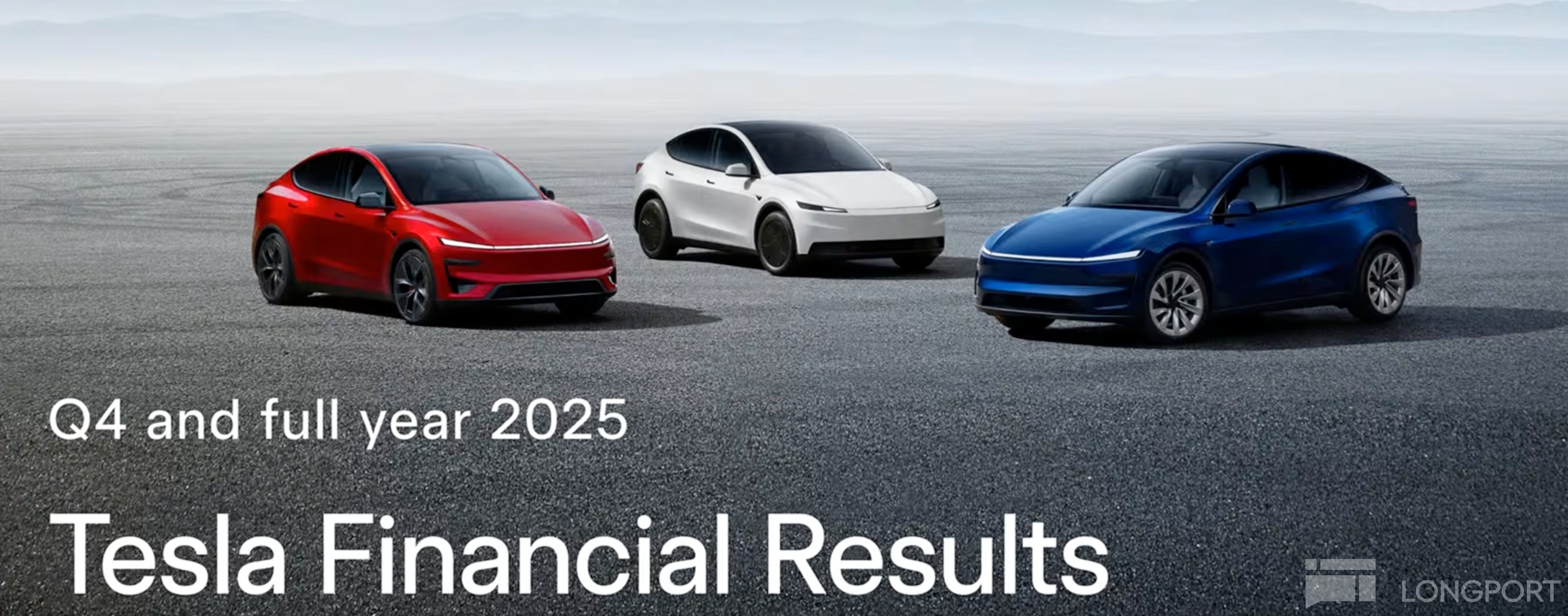
$Tesla(TSLA.US) Based on the provided Q4 2025 and full-year earnings call transcript, from an investor's perspective, this meeting released a significant amount of heavyweight news regarding the company's strategic transformation, capital expenditures, and future growth points.
Here are the key highlights worth noting:
1. A Complete Strategic Transformation: From Automaker to AI & Robotics Company
This was the clearest signal from the call. Tesla is undergoing an aggressive restructuring of its core business.
- Discontinuation of Flagship Models S/X: This is a landmark event. Musk announced that production of the Model S and X will be phased out next quarter, calling it a "glorious retirement."
- Fremont Factory Conversion to Robot Production Line: The space previously used for S/X production will be converted into an Optimus humanoid robot factory. The long-term goal is to achieve an annual production capacity of 1 million Optimus robots in this space.
- Optimus Update: The company plans to release Optimus 3 in a few months and expects it to have a significant impact on U.S. GDP. Although still in the R&D phase, some production is expected by year-end.
2. Substantial Progress in FSD & Robotaxi
The autonomous driving business, which investors are most concerned about, has reached concrete milestones with clear timelines.
- Unsupervised FSD Rollout: Tesla has launched a fully driverless paid ride service in Austin, with no safety drivers or follow vehicles.
- CyberCab Production Timeline: The dedicated Robotaxi model (CyberCab) is expected to begin production in April. Musk predicts that the vast majority of Tesla vehicles produced in the future will be CyberCabs.
- Business Model Shift: FSD is transitioning entirely to a subscription-based model, which will not only change the revenue structure but also impact automotive gross margins in the short term (as large one-time revenue recognition is no longer possible).
3. Massive Capex Plans & Infrastructure Development
To support this transformation, Tesla is entering a period of high-intensity investment, which will pressure free cash flow but demonstrates the company's long-term ambitions.
- Surge in Capex: 2026 capital expenditures are projected to exceed $20 billion.
- Allocation: These funds will be used for the construction of six factories (including a refinery, LFP factory, CyberCab, Semi, new Mega factory, and Optimus factory), as well as large-scale AI computing infrastructure.
- Terafab Chip Factory Concept: To address geopolitical risks and potential chip supply bottlenecks in the next 3-4 years, Musk proposed that Tesla needs to build its own Terafab (a large-scale chip factory integrating logic, memory, and packaging) domestically. This is an extremely ambitious and high-risk plan aimed at achieving chip self-sufficiency.
4. Financials: Gross Margin Recovery & Cash Reserves
Despite transformation pressures, core financial metrics show resilience.
- Gross Margin Recovery: Q4 gross margin exceeded 20.1%, a level not seen in the past two years. Automotive gross margin excluding credits improved from 15.4% last quarter to 17.9%.
- Cash Reserves: The company holds approximately $44 billion in cash and investments, providing a cushion for the upcoming massive capex.
- Bitcoin Impairment: Net profit was negatively impacted by Bitcoin mark-to-market adjustments (down 23%).
5. Strategic Investment in xAI
- Related-Party Transaction Confirmed: Tesla confirmed its investment in xAI, another AI company under Musk. Management explained this is to leverage xAI's technology (e.g., Grok model) to accelerate Tesla's progress, such as managing large autonomous fleets or coordinating robots for factory construction.
6. Strong Growth in Energy Business
- Performance Highlights: Energy revenue reached $12.88 billion, up 26.6% YoY, with record deployments across all regions.
- Future Plans: The goal is to achieve 100 GW annual solar cell production capacity and integrate the entire supply chain.
Summary: Key Risks & Opportunities for Investors to Digest
- Opportunities (Bull Case): Tesla is no longer just an EV company. If Robotaxi and Optimus scale as planned, its total addressable market (TAM) could grow exponentially. The achievement of unsupervised FSD operation is a major technical positive.
- Risks (Bear Case): Discontinuing the S/X may hurt the premium brand image in the short term; the $20B+ capex and Terafab plan are extremely capital-intensive and challenging; the FSD subscription shift will pressure margins near-term.
This call clearly communicated Tesla's high-stakes bet: sacrificing short-term profits and legacy models to secure absolute dominance in autonomous driving and general-purpose robotics.
The copyright of this article belongs to the original author/organization.
The views expressed herein are solely those of the author and do not reflect the stance of the platform. The content is intended for investment reference purposes only and shall not be considered as investment advice. Please contact us if you have any questions or suggestions regarding the content services provided by the platform.
